Saturday, October 26, 2013

I'm Back

My apologies to regular readers for not writing posts the past few weeks.   I have just completed some major life changes and am planning to make more.
Today I started the fine Florida fall weather with a hike.  A cold front had moved in and the temperatures were now several degrees lower.  It was 79 degrees after lunch, about 17 degrees cooler that it was here just last week.  I parked at Green Springs Park on the north side Lake Monroe in Volusia County, and hiked east along the paved East Central Rail Trail at the junction.  The Springs to Springs Trail goes to the west or left, and it follows the road up to the Interstate bridge where it suddenly ends.  While the extension/completion of both trails is still an unfunded dream, I prefer the idea of bicycling or walking towards the coast.  It was breezy and well shaded.  Trail traffic was very light, with only one runner, 3 maintenance tractors and 5 bicyclists the whole way out and back.

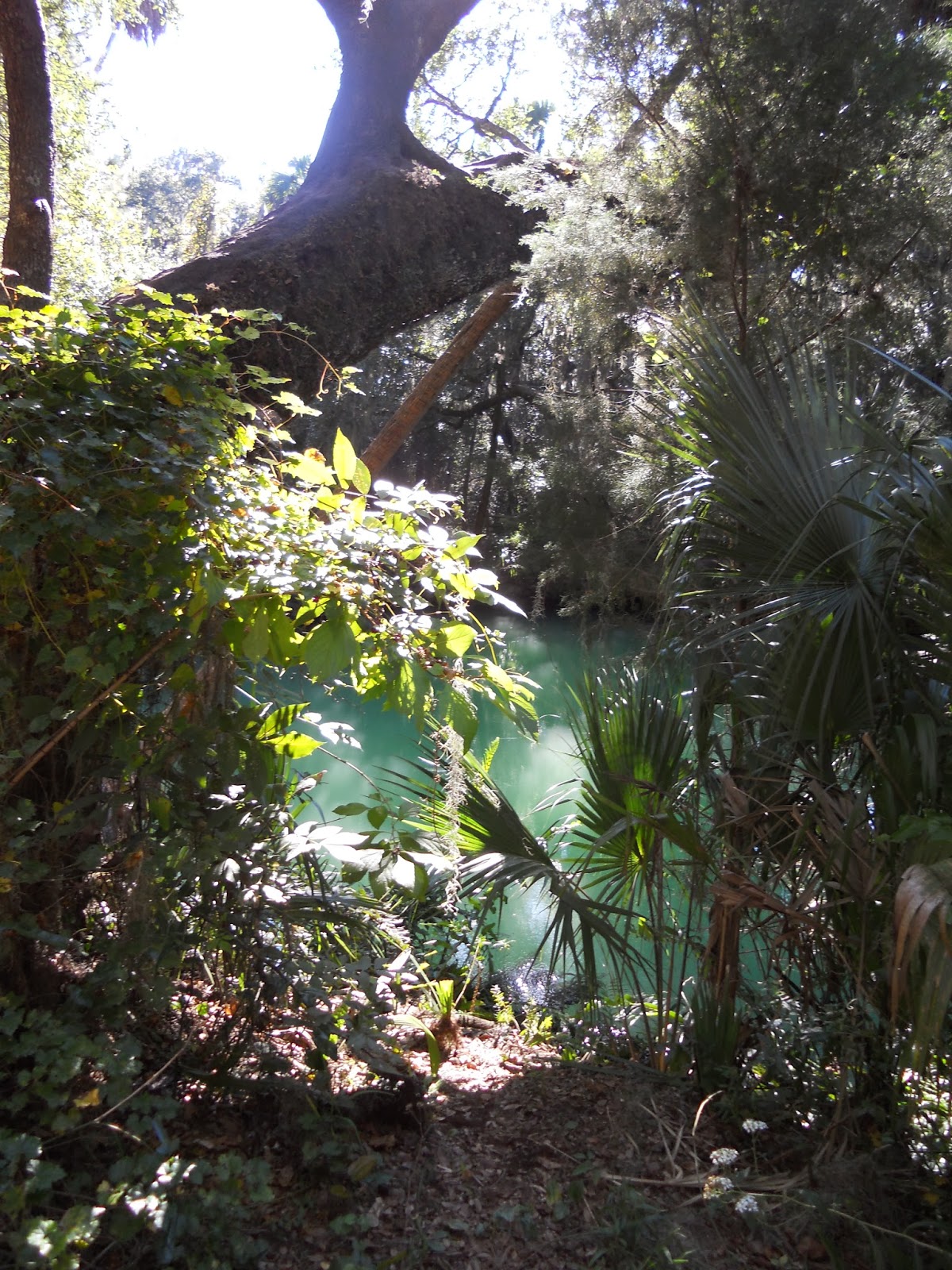
Green Springs is...green!  And sulfurous.
My plan was to hike 5 miles, and I did so with a little more trail time to reach the Audubon site which is just past the 2.5 mile marker.  Being alone on the trail was pleasant and while I missed talking with my friend Walt, it was still a nice day to be out.  The sky was clear, with no clouds.  I could hear birds call and watched many small birds dart between trees.  Eagles and hawks circled the upper breezes.  That breeze was cool (for Florida), but not cold.  There was no threat of bad weather or impending doom, like I have hiked in during a good part of the year.  I had a good time.

The trail is mostly rural, with a touch of urban life.

Here it is more rural.  An eagle's nest is off to the right in the high trees.

All to myself.
My hiking time is still slow.  It took me 3 hours to hike 5.5 miles, with stopping to take pictures and eat a small snack.  I didn't sit on a bench anywhere for long; I was right back up and walking, really just enjoying being outdoors!


At the 1 mile marker is a new bicycle repair stand, a Dero Fixit.  This is the first outdoor model I have seen that is permanently mounted and has tools (attached with wires) with a pump.  It holds your bicycle up by the seat post so you can work on it.  It also has QR Code instructions for smart-phone users.  If you only carry a patch kit or a spare tube, most quick repairs can be completed with this setup.  I hope Volusia County adds more of these unique stands along their more popular bike-pedestrian trails and that other trail associations are made aware of the benefits of self-sufficiency for bicyclists.

In Florida, fall is in the color of the grasses and shrubs, not in the leaves like it is up north.

Here the fall seeds are ready.


My turnaround point.  The next photo is on the left side, about a quarter mile further.

I'll be back!
The day continued to be beautiful and clear and I walked along to my turnaround point at 2.5 miles.  Then I decided to continue a little longer to reach Audubon Park.  I walked back along the dirt road, enjoying the bird song and the first signs of fall foliage.  I plan to return for a better visit of the park soon.

Fall flowers in Florida.

These little fuzzy guys were all along the trail fences.  Is a cold winter ahead?

Back to Green Springs.  This is opposite the spring from the opening photo.

So much of Florida's wildlife is above ground, in the tree canopies.  Remember to look up when out. 
My return walk was a little more brisk, but just as peaceful as the trip on the way out.  It has been weeks since I hiked outdoors, the Florida temperatures were too high and the weather was too wet for me.  I'm glad fall is finally here with outdoor-friendlier weather.  I was glad for the silence of today's hike, with time to reflect on my life's recent changes.


Friday, September 13, 2013

Oh September

From Gossamergear.com
So it is still hot outdoors in Florida, but the days are now beginning to get a little bit shorter.  The nights are only hot on occasion (no more mid-80's temperatures) and that Florida sun is not quite as hot as it was a week ago.
It is still far from cool fall weather, but there is a positive shift.  I can feel it.  It has motivated me to start exercising (indoors) again and to start hiking outdoors to get ready for fall and winter backpacking and bicycling.
I started last week simply with 50 sit-ups (crunches) and 10 leg lifts.  The idea is to get myself used to doing these again on a daily basis.  Each couple of weeks I'll be adding more bodyweight exercises from the photo above and will be roughly following their workout plan.  If the weather cools a little, I’ll start riding the bike again once or twice a week and build up the mileage over the next few weeks on the local bike trails.
Here is a LINK to the exercise plan on Gossamer Gear's website that includes utilizing your body weight.  If you follow the picture above, I'm still at the EASY stage.
If you need some other help with getting started with an exercise program, Google “backpacking exercise” to find more plans and workouts than you could imagine.  There are many weight training and bodyweight plans which are designed to get you ready to backpack.  Most of these exercise plans tell you to hike as much as possible, work your body core, and to start slowly and build easy.  I have been lazy this year, but am excited to get outdoors hiking when the weather cools, so that’s my motivation.
Remember that when the rest of the country is buried under snow, you can use your summer-earned health to hike in Florida's best outdoor season.  Plan a balanced winter vacation for your family that gets you a couple days of family backpacking bliss along with quality family time at Walt Disney World.  Check out FLORIDA TRAIL MAPS here.
Fall Florida backpacking trips with the Tampa Bay Sierra Club begin the first week of October.  I should be ready to start about mid-month, and will lay out a plan for that in the next weeks.

Saturday, August 10, 2013

Darkest before the dawn

It is SO hot right now in Florida.   Yeah, I know I chose to live here where the winter weather would be mild.  It has rained almost every day the last 2 months at my house. The weatherman on TV last night called this the "dog days" of the year.  Because it is too hot and wet to go outside, I've gone inside to the Internet for some escape and planning.
Get yours at nationalparks.org
Mark this date on your calendar:  Sunday, August 25 is an "entrance free day" to a National Park near you! Check out the nps.gov site here.   National Parks near Central Florida include:  Canaveral National Seashore (New Smyrna Beach), Fort Mantazas National Monument (it is free anyway), Castillo De San Marcos National Monument (St. Augustine).
You can also tell the Park Service what services you would like to see at the Colorado National Monument and other sites.  Start here to make yourself heard.
You could also win National Park gifts at the National Parks Foundation site (like Trips and Outdoor Gear) by submitting your National Park photos here   They have 10 different categories and you can submit up to 10 photos, and even post a video of your trip.
If you want to just lay back and relax, you can watch the nps.gov webcam views at Rocky Mountain National Park here.  Even if you haven't been there it is very cool to look at the photos.  We used to go to the park a couple times each year we lived in Colorado.  Other parks also have webcams to watch.
The National Parks Foundation site will send you email updates and you can get a National Parks Owners Guide (pictured above) if you signup here.  The owners guide is a nice tool for dreaming and planning your escapes and it shows you just how many National Parks there are.  Life outdoors for me is about going places and experiencing the outdoors.  That usually means a hike or two and sometimes means a backpacking trip or a bicycle ride.  It doesn't matter to me if it is a State or National Park or where it may be located.  There are many cool sites to see, places to go and trails to discover.  I'll see you there!

Saturday, July 27, 2013

Review - Mile Mile and a Half

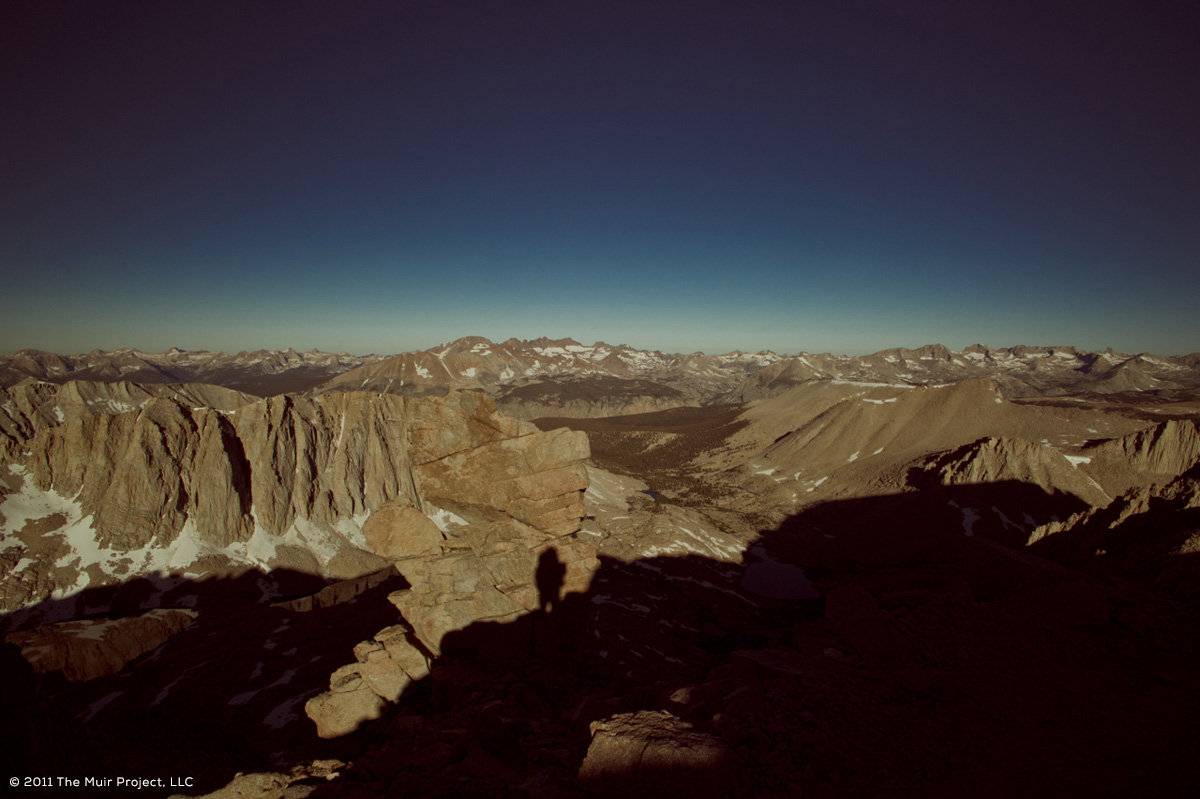
www.themuirproject.com
Awesome!  That's the first word that comes to mind after watching the film Mile Mile and a Half at the Deland, Florida screening last Thursday night.  Ric Serena and his wife Jen who hiked the trail, hosted the movie.  They gave a presentation at the beginning of the film,  and were there answering questions after the movie.
Carlos Schomaker, the president of Florida Trail was there with gifts for Florida Trail through-hikers there who have also hiked a long trail outside Florida.  One lady in the audience had hiked the this trail, the John Muir trail seven times (yes 7) and was hiking it again this summer.  Deb Blick was setup in the lobby to sign up new Florida Trail members.  Film DVD's, shirts and CD's were also for sale.

Ric thanked all those who helped sponsor the film through Kickstarter, especially Angela who was in the audience.  Ric also thanked the Atlas Theater.  He said driving by today and just seeing the name of the film on the marquee was one of the coolest things he had ever seen.  Ric spoke about how they had envisioned shooting a 15 minute web video about the trip, then later about shooting an art museum piece, then at the trips end finding they had shot enough material for a feature length film.  The film played to a nearly full house.  Ric's high school video teacher was there along with many family members.
I was lucky to sit in the audience beside the filmmakers family and we talked about them keeping Ric and Jens daughter for 5 weeks while the "kids" backpacked, and about all the good and great things that have happened with the film since they got back.

Technically the film is very, very good.  It is interspersed with still photographs that Jen took along the way. Time lapse photography was used creatively and brought an "oooh" from the audience during the scene showing the star fields and tents at night.  The GoPro camera was dunked under water (what it is designed for) and worn on the body for a couple scenes.  The music soundtrack was written by backpackers they met on the trail.  Ric had run ahead of the hiking group several times, setup his camera dolly and shot awesome moving dolly shots of the backpacking group as they hiked up the trail.  It was an unusually heavy snow year and they hiked through snow many days in July and crossed waist deep water in the swollen streams (big snow, deep water). Zee Hatley and Jason Fitzpatrick were the other camera operators and the team shot the trail as they saw it. The graphics were created by another hiker they met on the trail.
Remember, these people had to carry their video and audio gear, plus camping gear, plus food on their backs every day. And stop, unpack and shoot, repack, and walk.  And do it over again every day for 25 days.

Artistically, the film is excellent and it tells several stories using humor.  There was the sad story of one of the group having to drop out, he was going too slow and was afraid of holding the group back.  There was the cool story of a guy who they met on the trail who had hiked the Muir Trail 50 years ago that week.  There was the personal story of backpacking parents missing their child and wanting to share these special moments with her. There were the people they met and the ones who tagged along. There are the funny moments, a prank or two and non-stop trail name humor.  The scene where Durand Trench, the audio technician unloads and sets up his gear to record the sound of frogs, and then the frogs hush and don't make a sound until he after he has given up and repacked his gear.  And then the frogs start up again.  It is the universally funny times like this along with all those funny trail talk moments (blisters, heavy backpacks, smelly bodies) that had us all laughing out loud.
Overall the film shows the grandeur of the John Muir trail, the beautiful, stark lands they travel through, and showcases John Muir's "mountains of light" while it documents their 25 day hike.  And this is why the film is so good: It comes straight from the heart.
If you backpack and have not seen the film, go see it.  Watch the DVD if you can.
Upcoming film events include:
  • August 1st at the Mountaineers Program Center in Seatle.
  • August 9 at Adventure 16 in West LA.
  • August 23rd at Adventure 16 in San Diego.
  • September 6th at the Pacific Crest Trail Days in Cascade Locks, Oregon.
Watch the website here for more information.

Crafty Marmuts!


Tuesday, July 9, 2013

Mile. Mile and a Half...

How far to the trail's end?  Mile. Mile and a Half.
Central Florida will be hosting a screening of the film "Mile. Mile and a Half" in Deland at the Athens Theater, downtown on 17/92.  Florida natives on the project have brought the film here and in partnership with the Florida Trail Association, will present the movie next Thursday evening, July 18 at 7:30 PM.  Cost is only $10, with half of that being a donation to the Florida Trail Association.  Get tickets here.
Working at Elevation.
The Muir Project movie is about hiking the high sierra mountains from Yosemite to Mount Wilson. The 25 day excursion was professionally captured using the latest digital film technology.
Working as a media professional for many years, I understand the technological feat of carrying the equipment necessary to film on your back with your backpacking gear, while making your daily miles, cooking and setting up camp nightly on a 25 day through hike is extraordinary.  The subject matter is some of the most beautiful, scenic and remote land in the World, and it is a life-changing hike.
Click here for film previews. 
Please join with Central Florida for this epic screening.  It may change your life too!

Friday, June 21, 2013

Preventing Blisters

Back in the winter hiking season, during January 2013, Sandra Friend invited me to write a blog for use on her website, Florida Hikes! I did, and this is it.  I'm printing it here for those readers who have asked about foot care.  Thanks Sandra!

Blisters can be your worst nightmare on the trail.  They are so much easier to prevent than to treat.  I know, because I have been plagued with them my whole life, until a couple years ago.  All of my boots since I went to Philmont as a Boy Scout in 1971 have blistered me.  Even at Philmont I had one blister start as a hot spot, but I caught it in time, put on a band aid and finished the trail with no other problems.  That was long before duct tape was available everywhere.  I had worn those boots almost daily since I bought them, and they were well broken in before the trip.  After Philmont I had blisters every time I hiked.  I tried different sock combinations, different boots and every bandage I could find in the foot section of the pharmacy, but still had blistered, painful feet, with lost and blackened toenails.  I even looked into having custom boots made for me once but the very high cost of admission drove me away.
Disgusted with hiking boots, I started day hiking in my trail running shoes which I had purchased because they had good heel support and were comfortable.  After quite a few different trips over quite a few years, I realized it had been a very long time since I had a blister on my feet.
When we moved back to Florida from Colorado, some of the scout troop leaders here made it clear adults and scouts were to wear boots when hiking.  Well, the blisters came right back.
Body Glide comes in multiple sizes
About that time I read a blog about hiking with "happy feet" by using Body Glide, or Hydropel as it was called then.  It is a petroleum based jelly ointment that you rub on to apply, like a deodorant.  I tried it with the same scouting boots and socks and guess what?  No blisters!  I also used it on an all-day Ocala National Forest day hike in 2011 and it worked fine with my worn-out, full of holes trail running shoes.  Body Glide came from the ultra-marathon running industry, where it has been used for several years by serious distance runners.  Body Glide lubricates your feet, so almost nothing will wear a hole in you.  It eliminates friction.  It makes your feet just too slick to rub raw against anything in your boots or shoes.  The story also said it prevents "swamp foot" from your feet being soaked in water daily.
I later read that when backpacking, clean and lube your feet at night after you stop for the day, then re-lube them in the morning with Body Glide before you start walking again.  If you do get a hot spot, stop right then and re-lube the affected area.  That will usually prevent a blister.  Body Glide will also work for chafing pretty much anywhere on your body like from pack straps, or a too-tight pack waist belt and is used by bicyclists to relieve saddle sores.
In case you wait too long and your hot spot becomes a blister, wash the treated area with soap and water to remove the Body Glide slickness to apply tape to the area.  Typically Leukotape works fine, but so does duct tape with a spot of ointment (from your chap stick).  It has been a long time since I had to do that.
When hiking the Florida Trail, you can spend many days with wet feet (and more) walking in water ankle to knee deep, even to waist-deep sometimes.  The trail actually begins in water at the new southern trailhead at Big Cypress National Preserve at the Oasis Visitor Center along the Tamiami Trail between Naples and Miami.
Here's a link to REI where they have Body Glide in several sizes.  You can sometimes find it locally at Sports Authority, Walmart, Rite-Aid, CVS, or Walgreens.  The .045 ounce size is fine for short backpacking trips, with total weight of 1.2 ounces or 34 grams.  Some ultralight backpackers transfer the ointment to a lighter container to further reduce weight.
Central Florida has it's own issues with water on the hiking trails, especially after a heavy rain.  I can't think of any other product out there that can better prevent blisters than Body Glide with the twice-daily application.  If it works for me and my feet, then it should work for you.

Friday, June 7, 2013

Canaveral National Seashore

View from the top of Turtle Mound.
My friend Walt and I went for a late spring hike at Canaveral National Seashore, just south of New Smyrna Beach.  I have been to the Merritt Island part of the park several times before on fishing trips and canoeing the Mosquito Lagoon, but had never made it to the Canaveral Seashore.  The Seashore is 24 miles of undeveloped shoreline on the Atlantic coast along a barrier island, running from seven miles south of New Smyrna Beach down to Cocoa Beach.  It also contains the government sites of the John F.Kennedy Space Center and the Cape Canaveral Air Force Station.  This land was set aside in the late 1950's to provide room around the space center and military base.  In 1963 the US Fish and Wildlife Service managed Merritt Island Refuge with the National Park Service operating the National Seashore since 1975.  Car and motorcycle daily entrance fees are $5, bicycles enter for $1.
The shore, few people and absolutely no buildings.
The shoreline is made up of a brown, course sand (unlike Daytona Beach's white fine sand) and the views stretch for miles with no buildings.  No condos.  No hotels.  No homes.  No businesses.  No cell towers.  No nothing.  When you get onto the beach and walk, it feels like what was intended by nature, a natural, relaxing and peaceful walk in the sand.  Personally, I would prefer all of the nation's shorelines to be just like this one, with a road and parking spaces every few miles, and no beach access allowed over the dunes anywhere except where deck access has been built for you, and with no permanent structures built on the variable land of barrier islands.
The Canaveral Seashore can be a narrow world between the waters.  There are places you could throw a rock-sized shell from the Atlantic Ocean into the Mosquito Lagoon.  Some areas of the barrier island are much wider across, like at Turtle Mound and around the old town of Eldora.  We knew the weather was going to get very hot soon and the bugs would be awful, and we wanted to visit the park before summer heat and humidity set in.
Walt on the easy walk up and down boardwalk of Turtle Mound.
Mosquito Lagoon.
Turtle Mound is a shell midden, or mound, now about 50 feet tall.  In the past it was estimated to reach another 25 feet in elevation.  It was an east coast navigation feature marked on most of the early Spanish, French and British sailing maps of the time and can be seen miles out to sea.  This mound is built of oyster shells mostly, and fish bones and it must have taken multiple generations of native American workers to process and pile these shells to this height.  When you look at how tightly the shells have been pressed together, you wonder at how many shells there can be in a mound this tall.  The mound walls become so steep near the top, the park service has built a trestle-like walkway to easily climb to the top of the mound at a gentle grade, and then when on the top to be able to look both in all directions without the users causing erosion or disrupting the mound.  The breeze on top was excellent.  The trees have stunted grown here are similar to the krumholtz wind-damaged trees in the Rocky Mountains.  The salt content in the air continually kills new growth, keeping the trees small.  It is believed the Timucuan Indians settled this region and built these mounds from 800 to 1400 AD.  The views are awesome!
The scenic view in the trees on the way down from Turtle Mound.
The lagoon's edge at Turtle Mound.
At the base of the mound, a school bus load of elementary children from Volusia County were learning the fine details of using a siene net and about how the Timucuan Indians lived, hunted and worked the land and sea.  Taught by knowledgeable National Park Volunteers, I could have sat and listened for hours.
The Welcome Center is where we started our morning, viewing a video about the park.  If you call with a question or to reserve a campsite, this is where the phone calls are answered.  The rangers here were excited about the turtle laying season about to begin and were discussing all the turtle programs they have underway and all the people they expect to visit the park.  Most of the Federally endangered Leatherback turtles come back here from the sea to where they were born to lay their eggs in the sand.  When they hatch at night, baby turtles follow the light reflected from the sea to return to the ocean.
Volusia County students in learning mode.
From Turtle Mound, we drove south to the end of the road and walked down to the beach.  It was mostly surf fishing-people here, some with carts loaded with poles and gear and we watched someone reel in a blue fish.  We noticed the crowds were mostly staying close to the parking areas.  The empty areas between parking lots seemed to go on forever, with nobody in them.  I decided that this will be one of my next bicycle rides, along the surf on the deserted beach.  We also walked over to the lagoon side where there was a boat launching ramp at waters edge.  From here you could easily see the how high the dune was above us, and imagine how easily a huge wave during a storm could crash over this area.  No Atlantic hurricanes are known to have attacked the area from Cocoa Beach north to St. Augustine in our time.

Looking north along the empty beach.


And looking south.
Castle Windy is the second shell midden we went to see.  Parking at the beach lot, we followed the half mile path through the woods to the lagoon side.  There was a pamphlet in a box at the start, numbered to identify plants and trees marked with posts along the path.  Here was where we met the full force of the name sake of Mosquito Lagoon.  The mosquitos were so thick around our heads we couldn't breath without inhaling a few.  My long sleeves and pants kept the bugs off my body.  Walt's back was black, covered with mosquitos and they wouldn't leave us alone until we re-applied my eucalyptus bug spray.  We finished the walk and stood along the lagoon shore in the wind where there were few bugs, before returning to the car.

Along the mosquito-infested trail to Castle Windy.

Castle Windy shell midden.
We next visited the community of Eldora after watching a turtle maneuver in the parking area.  This was once a farming community where Indian River citrus was first developed and grown in Florida, a popular brand of fruit you can still buy, though for years it has been grown elsewhere in the state.  They also grew indigo (a plant-based material for coloring fabric blue), raised honey bees and grew vegetables.  This is where saw palmetto plant berries were harvested for making pharmaceuticals (and are still used in treatment of prostate issues).  Palmetto honey is a light and very tasty honey that was a favorite up north where the crops were shipped.  Two tears of killing frost in the 1890's decimated the citrus industry and the town never recovered.  The last remaining house in Eldora was restored by the Friends of Canaveral in 1999 as a museum and it has a video you can watch about the early town, riverboat traffic and the people who pioneered the area.  The native plant life around the house was beautiful.
A Florida variety of coral honeysuckle.
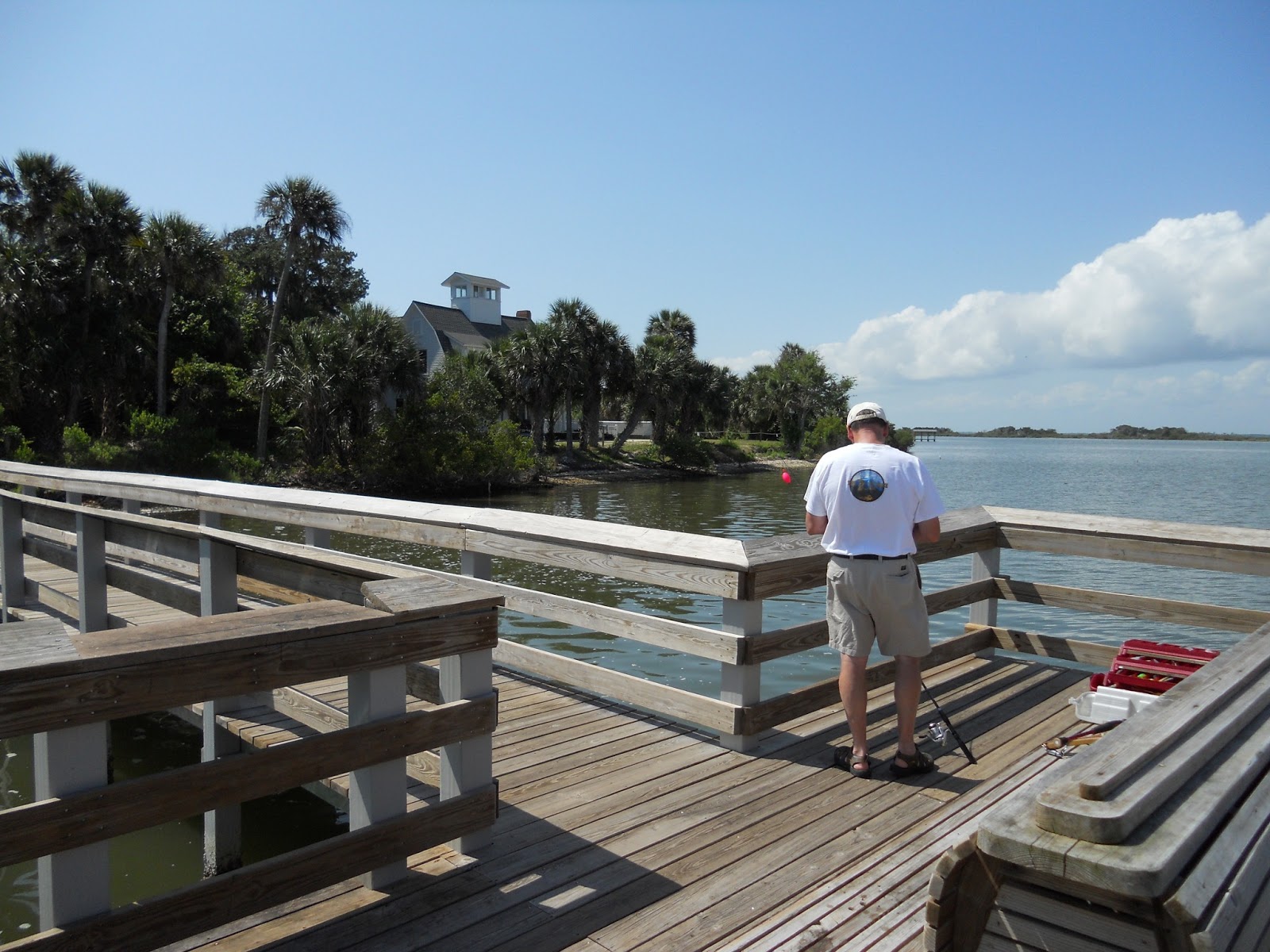
Fishing is another major highlight in the park.  In Florida you can get a no-fee license to fish from the sea shore or from a dock.  You can then fish in the Mosquito Lagoon shoreline, from the dock, in the surf at the beach, and you can fish while wading in the water.  For those who prefer fishing from a kayak or boat, a $17 saltwater fishing license will get you started.  Click here for fishing license details.  We saw several people boat and kayak fishing in the deeper water just off Turtle Mound, on land from the Eldora dock, while wading in the shallow lagoon and surf casting in the Atlantic.
Fishing at the Eldora dock.  The State House is in the background.
Fishing at Turtle Mound in the deeper water.
The endless sea life in both the lagoon and the ocean took our breath away several times during the day.  From Turtle Mound I saw what looked like a whale leaping and crashing in the ocean.  I tried on several occasions to get a photo of the several dolphin splashing in the lagoon.  Mullet jumped from the water many times and from the Eldora dock you could see fish swimming in the shallow water.
Birds are another big draw at the Seashore, with over 300 species recorded here.  There are over 1000 species of plants listed, for many of the plants this is as far north in Florida as they grow.  There are 14 federally endangered or threatened species of wildlife living here including manatees, turtles, southern bald eagles, wood storks, peregrine falcons, eastern indigo snakes and Florida scrub jays.  And in the winter there are the migratory birds from up north.
Resurrection fern in non-resurrected mode, waiting for rain to burst forth with green growth.
A strangler fig tree strangling an oak.
Flowers are everywhere.
There is primitive camping at the park, though I suggest you plan to camp here in the winter months when it will be much cooler at night.  You can register for either of the two Apollo beach area campsites or any of 14 waterfront sites on barrier islands along the Mosquito Lagoon.  You will need your own boat to reach them or you may rent a canoe for sites 1-5 at the park welcome center.  Campsite reservations cost $2. This backcountry camping brochure says campsites will cost $10 to $20, depending on how many people you bring.  My suggestion is that you call the Ranger at 386-428-3384 and ask.  Also check out the kayak and canoe trails in the area like this one in the Mosquito Lagoon at Shipyard Island (nice photos).
It was in the mid-80's the day we went, and the Florida weather was beautiful.  Walt and I finished the fine day with lunch outside the park at a fish camp on the Mosquito Lagoon and enjoyed a quiet drive through the barrier island village of New Smyrna Beach.  It was a great day!
Turtle in parking lot.

Friday, May 31, 2013

My First Year Blogging

May 26 was the day in 2012 that I first published a post called "Starting Out" on litepacker.blogspot.com.  In this first year, I have learned much about blogging and some about hiking, have hiked a lot of local trails and have successfully backpacked as an ultralight backpacker for the first time.
What a year!  My monthly readers are now averaging about 2400, and with the total people looking at my blog over the year equaling 15,602.  I have worldwide readers logging in from Poland, Austria, Germany and the UK too.  Thank you so much!
Now maybe all those page views actually were not people.  I have to assume MOST of those numbers are people, and I'm very thankful for the audience.  It has been very rewarding to see these numbers increase, but I do understand that I will need to increase my current weekly page views by thirty times or more to have what is considered a "successful blog".
I also write a couple other bi-monthly blogs, one about Bicycling over 50 and another about Family Micro-Gardening.  And I read several blogs about backpacking, bicycling and the outdoors, plus just about anything I can get my hands on - I love to read!.
I'm also thankful to bloggers like Phillip Werner at Hiking-Blogs Directory.  Phillip created this site to show ultralight backpacking blog pages and it sets us up on a level playing field.  Please drop by and vote for my site, it will increase my site rankings and move me closer to the top of the list.  Also thanks to Rebecca Garlock and Joe Wolf at the Outdoor Blogger Network for accepting my posts.  Being part of a larger community is great and my readership increased significantly with both sites.
I did recently setup my site for an RSS feed and am working on making it actually function.
Thanks also to the Florida Trail Association Central Florida Chapter and especially to Rachel and Lou for their tireless work and trail maintenance, and for allowing me to post and write about the group on my blog.
Thanks to local outdoors author Sandra Friend with FL Hikes for offering me an opportunity to assist her by transposing her hike recordings.   Sandra then took them and finished the text for publishing.  It was neat being in her "ear" while she walked the trails, learning technically how she documents her work and gets it to print for you to read.  She also published a blog of mine on her web site, which brought me some readers.  I am forever in her debt!
Many thanks to Ben at the Sierra Club Tampa Bay Group for allowing me to join their backpacking trip, and for leading such a successful backpacking trip.  I'm looking forward to joining the Central Florida Sierra Club group over the summer and traveling with Ben and crew on West Florida backpacking trips next fall.
An even bigger thanks to my wife for allowing me more than my fair share of time on the family computer this past year to write these blogs, and for proofreading and offering suggestions to improve my writing.  We've also hiked several of the trails together that you have read about and even more that you haven't.
Just like last year, I will slow down writing my posts during the hot Florida summer heat, picking up again when the weather cools a bit this coming fall.  It is like the seasons are reversed down here, the summer being so very hot that you cannot get out and enjoy the outdoors.  When the temperatures here reach the upper 90's you get burned just getting into your car.  Where up north, it is the winter season when you can't get out because it is too cold.  Winter is typically very mild down here, and that's when I'll be backpacking, bicycling, kayaking, getting out and writing about it.
And the most thanks go to you for reading my blog.  I really appreciate it.  And thank you for a great first year blogging!

Friday, May 24, 2013

REI Flash 18 Water Bladder Holder MYOG

For my REI Flash 18 daypack, the water bladder pocket does not have a holder for a bladder at the top of the pack.  Usually my Platypus 2 litre bladder works just fine, but last week the top somehow folded over, cutting off my water supply before it was empty.  When I opened the pack to see what the problem was I was surprised to find the water bladder had folded over, until I noticed how empty the bag was.  For ultralight day hiking and bicycling I will usually carry a nearly-empty pack, the water being the most important item in the pack.
REI Flash 18 daypack and parts
While shopping recently, there was a clothing hook (for socks?) laying on the floor as trash.  I picked it up and pocketed it, thinking of what I could use it for.  Well, here it is!
Poking the hole
I poked a hole into the center of a seam along the inside pack top using a hammer and a small screwdriver with a sharp point. This seam made it possible to poke a hole through while staying totally inside of the pack.  Then I threaded a small zip tie with the clothing hook through the hole and cut off the excess of the zip tie with wire cutters.  The blue foam is a piece cut from my old sleeping pad, to give the pack support and shape, and to pad my back from whatever I may be carrying.
Attaching the hook with a zip tie
When installing the Platypus, it was easy to loop the hook through the white clamp top of the bladder.  It held the top of the bladder without an issue and was small enough to not be in the way when loading the pack with anything else.  Once the pack is placed on my back, it straightens out the bladder and holds it upright, preventing it from folding over.  And it doesn't weigh anything on my scale.

A simple MYOG, a simple fix, my water problems are solved!